90s Walkthrough: How Commandos Taught Me Patience, Strategy, and Never Giving Up 🎖️
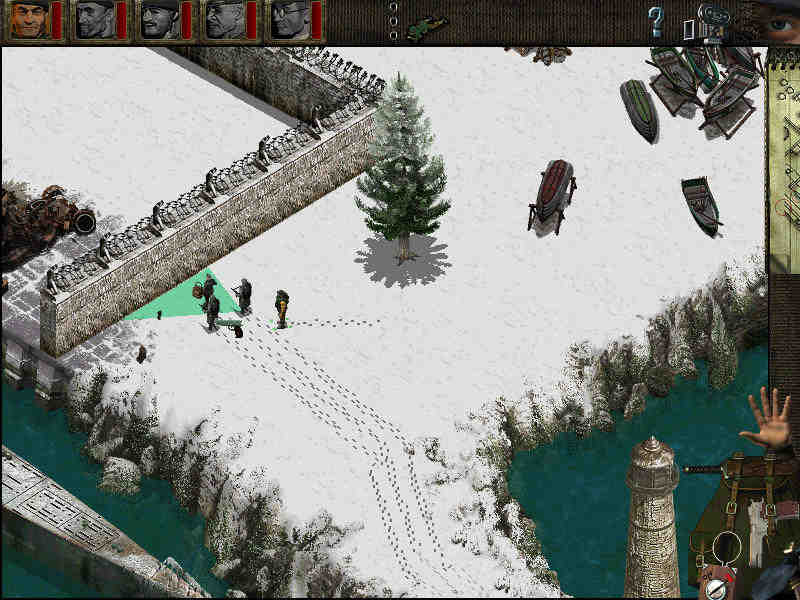
If you were a 90s kid who loved PC gaming, you probably remember the sound of the CPU humming late at night while the rest of the house slept. For me, those nights belonged to Commandos: Behind Enemy Lines.
Developed by Pyro Studios and published by Eidos Interactive, Commandos wasn’t loud or flashy. It didn’t reward speed. It demanded patience. It demanded thinking. And most importantly, it taught me something that stuck with me long after I shut down the PC — never give up, even if you have to start over from the beginning.
🪖 The First Mission – Learning the Hard Way
I still remember loading into one of the early snowy missions. The map looked calm. Just a few enemy soldiers walking predictable routes. It seemed manageable.
It wasn’t.
The first time a guard spotted me, alarms rang and within seconds the entire base turned into chaos. My carefully placed commando was gone. Mission failed. Back to the beginning.
At that age, I wasn’t used to games being that unforgiving. There were no checkpoints every two minutes. No forgiving respawns. If I made a mistake, I paid for it fully.
And yet, instead of quitting, I restarted.
Every restart taught me something. I began studying patrol patterns like I was solving a real military operation. I learned that rushing even one second too early could destroy twenty minutes of careful planning. Slowly, I stopped reacting and started thinking.
That first successful completion didn’t feel like winning a game. It felt like solving a puzzle that fought back.
🌍 Missions That Felt Like Different Stories
As the game progressed, every mission felt like stepping into a new war story. Snow-covered landscapes where movement had to be calculated carefully. Desert missions where visibility was high but cover was scarce. Urban compounds filled with tight corridors and heavily guarded entrances.
Some missions required infiltration deep into enemy territory. Others demanded sabotage — planting explosives and escaping without leaving a trace. There were missions where I had to rescue prisoners while silently eliminating threats along the way.
Each environment changed how I played. Snow made positioning important. Cities required corner control. Night missions offered shadows, but also uncertainty.
The variety wasn’t just visual — it forced me to adapt constantly. I couldn’t carry the same strategy into every map. I had to observe, rethink, adjust.

🧠 When the Full Team Arrived
As I unlocked more commandos, the game became even more layered. The Green Beret was strong and dependable. The Sniper felt like precision incarnate. The Marine could navigate water silently. The Spy could walk among enemies, but only if I controlled him carefully.
Coordinating them felt overwhelming at first. I remember sitting for long stretches just planning synchronized moves. Distracting one guard with a noise while positioning another commando behind him. Timing a sniper shot exactly when another patrol turned away.
There were moments when everything aligned perfectly. Two guards eliminated simultaneously. No alarms. No suspicion. Those were magical moments.
But there were also nights when one tiny mistake ruined an entire hour of progress.
And that’s where Commandos truly tested me.

💣 The Mission That Nearly Made Me Quit
There was one mission deep into the campaign where the enemy presence felt endless. Guards overlapped patrol routes. Narrow spaces left almost no room to hide bodies. One wrong takedown would expose everything.
I failed repeatedly. Sometimes within minutes. Sometimes after nearly finishing the objective.
Frustration would build. I would lean back in my chair, staring at the screen, questioning whether I was even capable of finishing it.
But something about the game wouldn’t let me quit. Instead of giving up, I started over again. Each attempt was slightly better. I adjusted timings. Changed approach angles. Used the Spy differently. Saved the Sniper for critical moments instead of early eliminations.
And then, finally, one attempt flowed perfectly. Every move worked. Every body was hidden. Every distraction landed at the right second.
When the mission ended successfully, I didn’t cheer loudly. I just smiled quietly.
It wasn’t luck. It was persistence.
🎖️ The Lesson Hidden in the Game
Looking back now, Commandos wasn’t just about stealth or World War II tactics. It was about resilience.
It taught me that failure wasn’t the end — it was information. Every failed attempt gave me insight. Every restart made me sharper. It showed me that sometimes the only way forward is to begin again, but smarter.
As a 90s kid, I didn’t realize it at the time, but those endless restarts shaped how I approached challenges outside gaming too. When something didn’t work, I didn’t immediately quit. I reassessed. I tried again.
Commandos didn’t give easy victories. It made me earn them.
🏆 Completing the Campaign
When I finally completed the campaign, it felt different from finishing any other game. There were no flashy celebrations. No dramatic cutscenes to overshadow the achievement.
Just a deep, internal satisfaction.
I had navigated complex battlefields. I had failed countless times. I had restarted missions from scratch more than I could count. And yet, I finished.
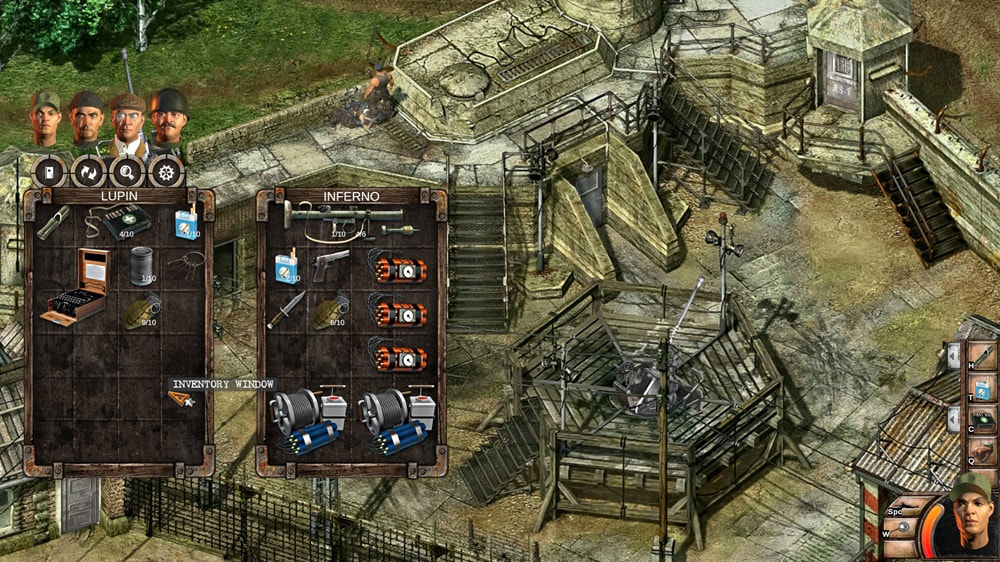
Even today, when I think about Commandos 2: Men of Courage, I remember that same feeling — sitting quietly in front of a glowing monitor, proud not just because I won, but because I didn’t give up.
💭 Why It Still Means So Much
Modern games are faster. More forgiving. More cinematic.
But Commandos gave me something deeper. It gave me patience. It gave me discipline. It gave me the understanding that success often comes after multiple failures.
As a 90s kid, those long nights restarting missions weren’t just gaming sessions. They were lessons in persistence disguised as entertainment.
And honestly, I wouldn’t trade those frustrating, unforgettable hours for anything.
Because Commandos didn’t just teach me how to plan a mission.
It taught me how to keep going. 🎖️


Comments
Post a Comment